Monday, June 25, 2012

Feelin' Hot, Hot Hot

So needless to say it's hot outside. Where we live, we are dealing with a severe drought. In fact, it's been roughly two weeks since we last had any rain. And my super-awesome-chief-meteorologist-friend says our rain deficit is more than a foot. Sunday was the hottest day of the year for us so far. So yeah... It's hot. And dry. And miserable.

This is where I want to chime in with an "I told you so." Last winter, everyone thought I was crazy for my concern about our very mild winter. And now we've had the driest Spring (and possibly Summer) in the books. Not to mention bugs (including harmful ones) are hideous this year since they all didn't die during winter. Believe it or not, there are reasons to like the cold.

But I must save a more in-depth rant on that for later. What we need to focus on is now. That includes us trying to figure out how keep cool and our garden alive. Let us first get to our plants. Over the last couple of weeks, we've moved about everything we can to the front porch so the plants have some relief from the unbearable sun. It's a quick fix and frankly, all of those plants are doing better than the ones in the garden beds. We moved the basil to get even more shade after it showed signs of suffering. So even full-sun plants are hurting from this heat.


Mint, Marigolds, Calendula, Chamomile & Echinacea
We are also dedicated to watering every thing every morning. I used to water in the evenings, but all the water would absorb during the night and leave the plants to wilt throughout the hot days. The morning watering is helping, but you can tell the zucchini and squash aren't as delighted as when it fully rained. It doesn't help that our backyard is north-ish facing so it's getting all of the sun throughout the majority of the day. But hey, some of the dryer plants like the lavender & sage are loving it.

When you do water , focus all of the H-2-Oh on the roots around the stem. Try to avoid hitting the leaves with water. That can lead to the leaves getting sunburned during the day or even bring disease and mold if you water at night. So I always try to just water at the base of the plant. If you can, also pour water away from the plant since most root systems branch out, not down.

But my purple bell peppers aren't the only living beings trying to survive this summer. So here's a few ways to keep cool:

- Wear loose-fitting clothing that's a light color
- Wear Cotton. It's lighter, more breathable, and helps our own perspiration
- Use Fans. They help circulate and cool the air even with Air Conditioning

Here's a biggie- focus on your feet. 25 percent of your sweat glands are in your feet. And that little fact can bring several options when it comes to cooling down. Of course there's the obvious use of breathable sandals over shoes. And if your dogs are hot, try either freezing a damp rag or place a bottle of lotion in your fridge that way you can apply it to your feet to cool down after a long, insufferably hot day.

With that in mind, you can also chill a wet bandana that you can tie on if you plan to work out in the yard. A long time ago when I rode & showed horses (long story), we would dump our shirts in cold water and put them on to cool off during our work days.

Water is another biggie for the hot summer months. So drink it up... with bottles of water that is. But sometimes you need more of a re-hydration boost. Even if you didn't run a marathon this afternoon, if you were out and sweating a lot, consider taking in some electrolytes. That can come from various sports drinks, but the latest "all natural" option for that is coconut water. Coconut water is fat free and low on calories while providing some potassium and sodium (key to serious re-hydration); but it's not the best thing out there. The levels of potassium and sodium are par. It doesn't really offer anything amazing compared to everyday intake of fruits and vegetables. Just sayin'.

You should also avoid taking in anything that can cause dehydration like caffeine an alcohol. Also just sayin'.

Since we are talking about what you consume, eat small. That includes smaller, more frequent meals or snacks. That prevents your body from working overtime to digest and metabolize. Nibbling on cold, water-based fruits like watermelon and grapes is a great summer pastime. And while it sounds crazy, eat spicy food. That helps produce sweat which helps you cool down. Sweat and hydration is key.

I have one last tid bit for you to keep in mind during this summer. And it's an amazing idea I saw on pinterest (of course). If you get a sunburn, try freezing & applying cubes of aloe vera. All you need is true aloe vera and an extra ice cube tray. I almost want my husband to get sun burnt so I can try this. But I shouldn't increase his risk for skin cancer just so I can use a cool pinterest idea... or should I?

Either way, keeping cool and hydrated are crucial for you and your garden during the hot summer months. And with June being this unbearable, I am really afraid of what August will be like. But at least you don't have to be in a drought to enjoy all these great tips on beating the heat. With that, sit back next to a fan, open up a chilled bottle of water, and stay cool my friends.

Tuesday, June 19, 2012

Wild Card: Squash-Giving

As I explained last week, we are getting in a lot of squash and zucchini early. It's hard to believe it's not technically summer yet, but I already harvested twice from our garden.
And that's not all that we picked this week
 Since last week, we were able to get about seven zucchini and six yellow squash. So needless to say, we needed to get cooking. Thankfully two dear friends from home came to visit us. Ashley even brought another zucchini recipe to try: chocolate chip zucchini cookies.
One of the best friends a girl could ask for
One night, we worked up a menu that would use as much as zucchini and squash we could use. This is what we came up with:
- Roast Beef Stew
- Cheesy Squash Casserole
- Zucchini Tots with a Garlic Aioli Sauce
- Zucchini Cookies

In total we used six squashes & more zucchini than I can remember. So we decided to call the night "Squash-Giving." Get it? It's like Thanksgiving? Hilarious, I know. None the less, it turned out great and delicious.
So let's start it off. First the non-squash dish. Our roast beef was a basic slow roast with some water, onion, celery, potatoes, and rosemary with some spices. Oh, and of course, it was made with local, grass fed beef. I'm not the biggest roast fan, but it was good. And we have a semi decent beef broth now.

Back to the squash dishes, there's the awesome cheesy squash casserole:
- 6 yellow squash thinly sliced
- 1 vidalia onion thinly sliced
- 1/2 cup grated Parmesan
- 1 cup shredded sharp Cheddar
- 1/2 cup sour cream
- Salt & pepper for seasoning
- 1 sleeve crackers crushed (note: breading does not work)

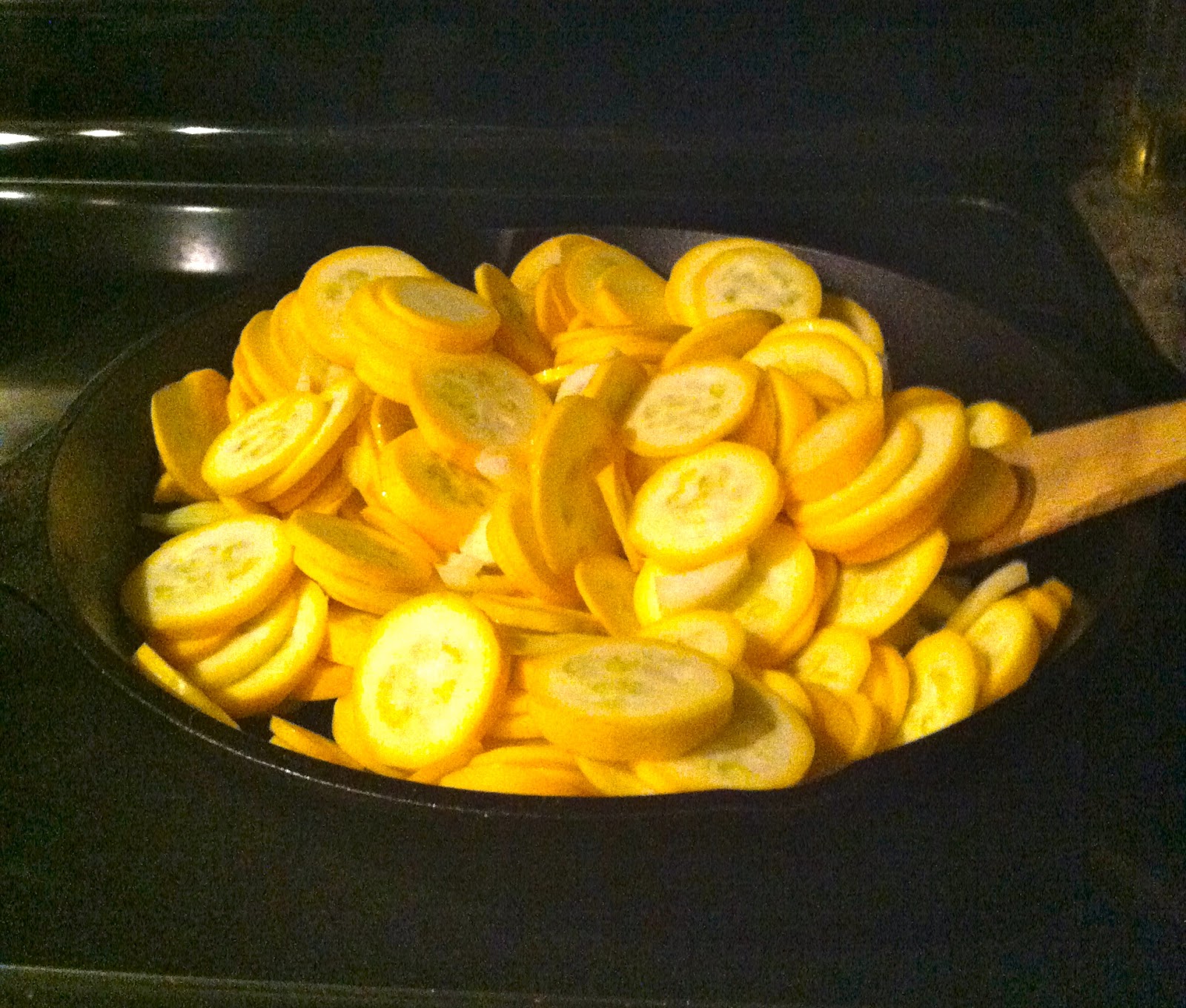
Saute the squash & onion in a pan. Warning: there's a lot of squash and onion. You will need a big pan.
Really. It's a lot of squash.
Mix everything else but the crackers in a bowl. Add the sauteed squash & onion. Mix together & pour into greased baking pan. Sprinkle crackers over the top. Bake in an oven at 350 degrees for at least 20 minutes or until golden brown on the top.  Enjoy. It's light, buttery, and fabulous.

Then there is the zucchini tots. It's a great recipe, but there wasn't quite enough. But here it is:
- 1 cup zucchini, grated
- 1 egg
- 1/4 yellow onion diced
- 1/4 cup bread crumbs, we used an Italian style
- Salt & pepper for taste

Put the grated zucchini into a dish towel and squeeze out the excess water. We did this for the zucchini cookies, but that's for later.
Squeeeeeeeze
After you get all that done mix the egg, onion, cheese, bread crumbs, zucchini, salt and pepper. Spoon the mixture into a greased muffin pan. Bake in an oven at 400 degree oven for 15 to 18 minutes or until top is browned. For us, there was so little that the bottoms burned a little.


But that's ok because we topped it with a great garlic and basil aioli that I originally use with some baked sweet potato fries:
- 2 Tablespoons fresh basil leaves sliced in chiffonade style
- Salt & pepper to the taste
- 3/4 cup mayo
- 1 garlic clove minced
- 1 Tablespoon lemon juice

First mix the basil, salt & pepper into one bowl. Mix mayo, garlic & lemon juice into another. Then combine. Simple & delicious.

Then there is the dessert: zucchini cookies. This recipe comes from Ashley's lovely mother in law.
- 3/4 cup butter softened
- 1 1/2 cups of brown sugar
- 1 egg
- 1 teaspoon vanilla
- 1 1/2 teaspoon orange extract
- 3 cups grated zucchini
- 3 to 3 1/2 cups all-purpose flour
- 1 teaspoon baking soda
- 1 teaspoon salt
- 3 cups granola cereal
- 1 cup semi-sweet chocolate chips (milk chocolate & butterscotch works too)


Cream butter & sugar in a large bowl. Add the egg, vanilla, orange extract & zucchini. Stir in flour, baking soda & salt before adding granola. Then stir in chips. Spoon out mixture on cookie sheet with tin foil. Bake in an oven at 350 degrees for 12 minutes. This recipe makes a lot of cookies.

And if that's not enough, we also made the delicious zucchini rice skillet last night. And there's still alot. of. zucchini.

I think we have a problem.

Monday, June 11, 2012

Getting Close to Harvest

Hello there- sorry about that abrupt week off. Last weekend, my husband & I hosted a fabulous housewarming party for our lovely friends in Western Kentucky. And while it was better than we could anticipate (which normally happens), we decided to take a breather for a bit. But now it's time to get back to the grindstone. And that's a good thing because we are getting close to the start of summer harvest.
Sad thing is, they are already bigger now
In case you didn't know, yellow summer squash and zucchini do amazing in the south. About three weeks ago, I mentioned why these two delicious summer squashes are so good for you. It's amazing how much our plants grew in just 21 days. We are going to have to harvest the first of our zucchini and summer squash this week. Summer squashes are pretty easy; you just cut it from the stem. The best thing to keep in mind is when you harvest it. You'll want to cut yellow squash when it's about 6 inches long. Zucchini is twelve inches or less. If you let it grow too big, the skin will get tough & it will be less pleasurable to the palate.
With that being said, we will probably have two or three zucchini and a yellow squash ready by the end of the week, if not sooner. At I've already found a few recipes I want to try thanks to the ever fanastic pinterest:

- Cheesy Squash Casserole: Made it last year. It. Is. Extraordinary. This recipe is light, buttery, and makes plenty for leftovers.
- Veggie Rice Skillet: This is already a dinner staple for us. But we added garlic. It needs a bit more of a kick of flavor.
- Stuffed Yellow Squash: Made last week with squash from a friend. Also needs a kick, but is surprisingly easy & mess-free.
- Zucchini Tots: Something the hubster & I really look forward to trying.
- Summer Vegetable Tian: A dish I've been dreaming to make since we planted our garden this year.
- Baked Zucchini Chips: Looks like a healthy, crunchy option to regular chips
- Baked Zucchini Fries: It's astounding how many unhealthy sides zucchini can replace.
- Roasted Parmesan Zucchini: Yes, there are a lot of zucchini recipes out there.

We are also seeing another plant that's getting close to the beginning of harvest season: my beloved chamomile.

Isn't beautiful?
I first have to say that our chamomile smells so sweet and wonderful. And while I doubt I will have enough to make tea throughout the winter, I look forward to drying it for a special brew. Chamomile is also pretty easy to harvest. For tea, just use your hand like a rake and pull off the flowers that are in full bloom. But if you plan to make chamomile essential oil, you'll need to cut about 3 inches down from the flower to include the stem and possible tops of leaves.

Hopefully this week, we will get a few buds and start drying. After that, I'll crumble it up and use a tea ball to make a spectacular, local cup of chamomile tea with honey. Yum...

If you enjoy cooking, there is really no greater joy than using food that you grew & harvested. In this day in age where most of us work for money, a garden allows you to take in and benefit from what you put your heart, energy, and soul into. Your hard work is a delectable seasoning for local dishes.

Monday, May 28, 2012

Memorial Day: Ode To My Grandfathers

I'm sure many of you are enjoying your Memorial Day weekend with lots of friends, food, and fun. I'm celebrating mine by relaxing with my Mother & husband. We even got some grilling in on Sunday.

But I wanted to express the importance of Memorial Day- to honor & remember the courageous men & women to gave the ultimate sacrifice to our country. Despite how you feel about our nation's politics, economy, or future, there should be no question about honoring our troops. I'm lucky enough to not have lost any friends or family to war, but I wanted to take the time to honor family members who have served.

Both of my grandfathers played their role in World War Two. My recent work in ancestry has lead to a lot of great stories & photos of them.

First there is my Grandpa Milliard T. Moses. He was actually enlisted before WWII, but when America entered the war, he volunteered to go back to the Army. He was a 31 year old banker and quickly married my Grandmother before re-enlisting. She was a teacher that met him at his bank in Southeastern Central Illinois.
Their wedding photo after getting married Dec. 1941
My grandfather was a Quaker and hated the thought of killing a man, but continued to served his country and helped patrol various locations along the west coat including in California & Alaska. My Mother mostly remembers him in charge of supplies along the Aleutian Islands (possibly Attu Island).
Millard Moses's ID card & dog tags for WWII
She says he never fought, but would have to prepare search parties when men would get stir crazy & leave the barracks. Most often those men would be found dead. After his second tour of duty, my Grandpa left the Army as a first lieutenant. We went home to a wife & a daughter, had two more children and lived a long life surrounded by loved ones. He died at the age of 89 in 2000.
Millard Moses holding my Mother
While Grandpa Moses patrolled in Alaska, my other Grandfather was half a world away in Europe. Grandpa William H. Swanson was a skilled airplane technician for the (then) Army Air Corps. He was a few years younger & little did he know of the world outside his West Central Illinois hometown.
William Swanson shortly after being drafted Feb. 1942
William Swanson's diploma from the Army Air Corps

William Swanson did a great job at documenting his journey from training in Louisiana to working & testing planes in England & Germany to inspecting damaged Nazi planes.


These are just a few from the possibly hundreds of photos he took. I'm still currently shifting through all of the photos & paperwork he left behind. But I do know that as a technician, he moved up the ranks to Staff Sergeant before returning home in 1945 on the S.S. Argentina.

After getting home, he met my Grandmother at a bar where she worked. The two got married & had two beautiful kids. He passed away in 2005 at the age of 88.
William Swanson holding my Dad with his wife, Marietta
There are a few others I know & love that have served our country including my stepbrother, Josh (Corporal for the Marines), old high school friend James Hall III (Navy), co-worker Jay Marchmon (Army), another co-worker Dillon Burnett (Army), and my husband's friend, John McAvinue (currently with the Navy). Thank you all.

I am so blessed to have such courageous family & friends who heroically served our country. I'm even more blessed that they all survived during duty. Every day, we should be thankful for the men & women who gave their all for our country & freedom. Who are you remembering today?

Monday, May 21, 2012

This Year's Garden

It maybe a bit lazy of me, but I figured I should take the time to go ahead and show off our garden for this year. We hope to do more next year, but we at least have some essentials.
Tomatoes to the left, peppers to the right
It wasn't until last year we enjoyed the benefits of growing sweet bell peppers. The interesting thing about our peppers this year is that they are purple bell peppers. I love sweet bell peppers of any color, but I hear purple is even sweeter. As with any bell pepper, it is low in calories and contains no sodium, fat or cholesterol. Peppers are also an excellent source of vitamin C. And with the color, they should hold plenty of antioxidants.

You may remember my trail & tribulation of growing beautiful tomatoes before the squirrels stole them. I can only hope that the squirrels in our new neighborhood are not tomato fans. Otherwise, we will have to build some kind of fence around them with chicken wire. I really hope to have a crack at canning for the first time this year. I at least want to try to make my own sugar-free tomato sauce.

Zucchini, squash, sage & lavender
I also discovered my love for zucchini & squash last summer. Zucchini is low in calories & a great source of fiber, protein, potassium, beta-carotene, and vitamin C.  And its good match, yellow squash, has vitamin C,  magnesium, vitamin A, fiber, folate, copper, riboflavin and phosphorus. We love to grill the pair whenever we cook out. I also found a great veggie rice skillet recipe that includes zucchini & bell pepper.

This summer is the first time we are growing sage. I've only used the herb once with some apple pork chops, but I hope to find more uses for it. It smells so good. First off, sage is a good cooling agent which can help swelling, cramps & hot flashes. Sage essential oil also has antioxidant and antimicrobial properties. You can even gargle sage tea to help a sore throat.

And let's not forget the lavender. I'm so happy I was able to make essential lavender oil last year, despite both of my plants dieing. Hopefully this year will be different since our lavender is in the ground verses a pot. I didn't find out until it was too late last year that lavender needs well drained soil (not potting soil) to prevent root rot. While I know lavender essential oil removes nervous tension, relieves pain, disinfects scalp and skin, enhances blood circulation and treats respiratory problems... I hope to try out cooking with lavender this year.

Speaking of herbs, I have a few potted plants too.
Calendula in the front, oregano in the back
My second attempt of growing calendula from seed is going great. I can't wait to see how this beautiful pot marigold blooms. Calendula essential oil can do wonders for the skin and it's in about any natural balm. It can soothe and heal dry and damaged skin, burns, cuts, rashes, diaper irritations, and other skin disorders. I'm just waiting for the flowers to bloom before melting down some beeswax to make some lip balm.

And what's any kitchen without oregano? It makes any pasta dish superb. But it's also healthy. It is a good source of fiber, Vitamin K, iron, and manganese. It has anti-bacterial & antioxidant properties along with Omega 3 oils.

Basil & Chamomile
While I've already mentioned my love for chamomile, what's a garden without basil? Basil is my number one favorite seasoning. It gives meals a nice, savory taste. Even the smell makes my mouth water. Basil is an amazing source of vitamin K, but it also has iron, calcium, vitamin A, fiber, and manganese. It also has certain flavonoids which help to protect cells and chromosomes from damage. And essential basil oil is shown to inhibit the growth of several types of bacteria, many of which have become resistant to antibiotics.
Echinacea
 And last but not least are the few echinacea survivors (I didn't have the heart to show the worse one) from our original cell starter kit. Now that two are getting a bit more shade, they are looking better. Echinacea tea is what you want to drink when you feel a cold or flu coming on. The (one day) beautiful purple cone flower gives your immune system a boost by stimulating the production of T-cells. And according to Three Fat Chicks, it spurs on a quick recovery for: urinary tract infections, sore throats, upper respiratory infections, enlarged prostates, sinusitis, ear infections, gingivitis, and canker sores. Just to name a few. And when topically applied, it can help everything from sunburn to eczema.

So there you have it, my beautiful garden. And these are just the basics. We hope to have a lot more things like onions, flowers, even a few trees next year. What do you have growing in your garden?

Monday, May 14, 2012

A Motherly Herb

I hope all of you had a fantastic mother's day yesterday. In honor of the weekend, I thought I would mention a herb that's so kind "mother" is even in its scientific name: Matricaria chamomilla. Also known as German Chamomile.
Found this beautiful photo on an herbal remedy site.
You've most likely have heard of chamomile tea. I've even mentioned it a few times on here. But how can this beautiful flower help you?

Chamomile has anti-inflammatory, anti-spasmodic and anti-bacterial properties. That covers a lot of ailments. Everything from using the anti-inflammatory to reduce IBS to fighting disease with one of chamomile's active anti-bacterial ingredients, Azulene. It's also a good fever reducer & does wonders for an upset stomach. I've also read that it helps skin ailments like rashes & eczema.


As long as you're not allergic to ragweed, chamomile is the most gentle herb to consume. In fact it's not only safe for kids, it helps with a wide range of childhood complaints like colic & teething.


But to get to the reason as to why a cup of chamomile tea is a woman's best friend. Outside of the benefits I already mentioned, Chamomile can also relieves menstrual cramping, heartburn for expecting mothers, and anxiety. It truly is a herb of wonders. It's the number one herb I mention to my friends (especially if they have kids).


There are different ways you can enjoy this beautiful flower. I frequently just have some chamomile tea with local honey. If you do decide to make a hot cup of tea, be sure to cover and let it seep for 15-20 minutes. If not, some of the beneficial, volatile oils could evaporate and all you have left is flavored water. 

Chamomile tea is super easy to find. But this year, I hope to be able to harvest my own chamomile. So far, it's turning out quite beautifully. To harvest this herb, you need to trim the flower right before it blooms & let it dry.
Crazy to think this all came for a few seeds
 A few dried chamomile flowers in a bath also said to make a pleasant, relaxing experience. That allows your skin to take in the benefits. And if you add it to boiling water, you can breathe in the steam mix which will break down mucus in the throat & lungs. This flower really is a cure all of basic ailments.

Monday, May 7, 2012

A Taste Of Honey

Sorry if you're getting tired of all the food blogs, but I can't help myself. But then again, food is an important part of our lives that should be highly considered. But enough of my soap box. I wanted to share another local, green, tasty product that we didn't really understand until moving to Western Kentucky: Honey.
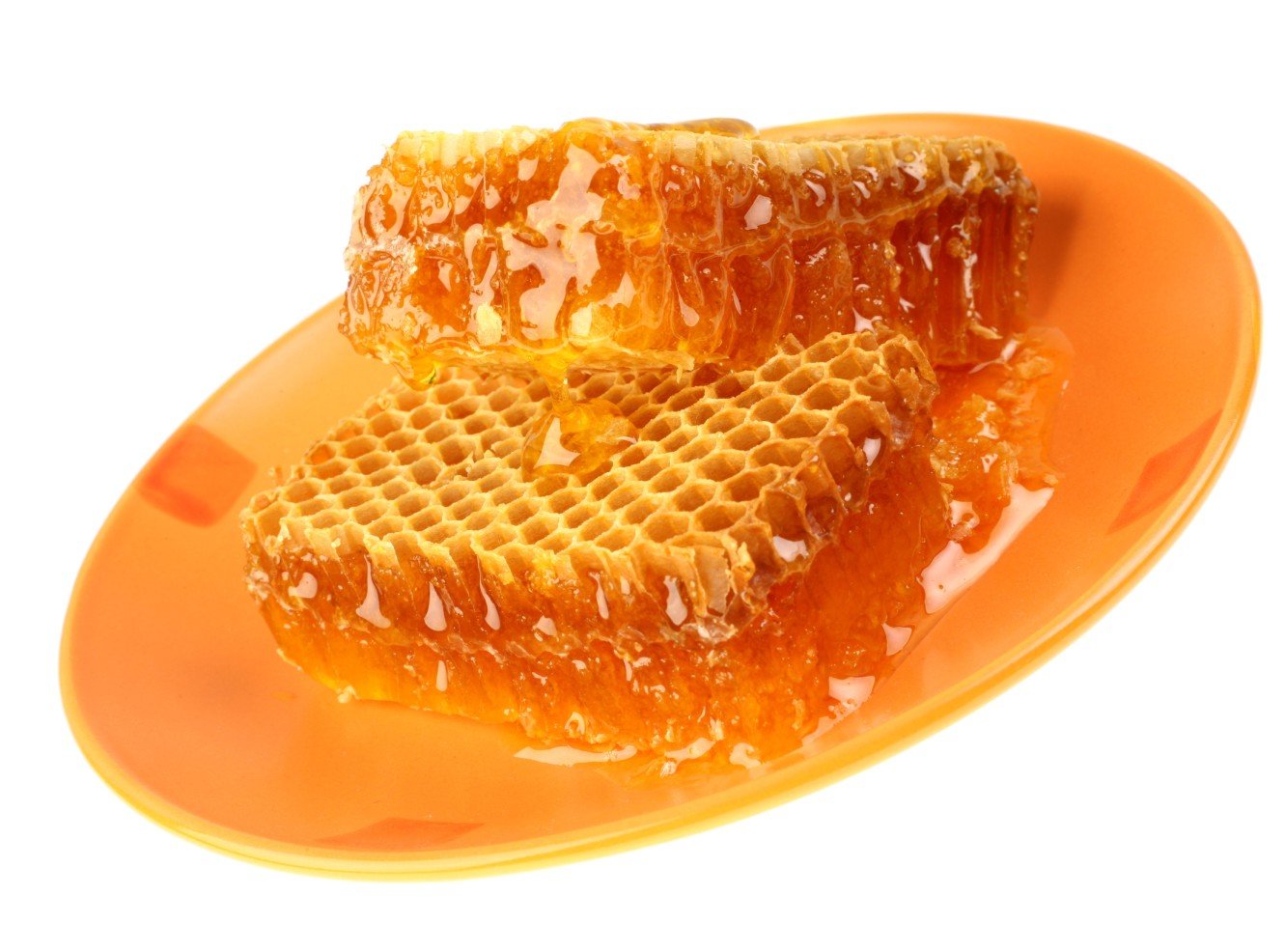
From a general google image search. It's from some global market site.
Honey is an amazing natural sweetener. While it has more calories than sugar, it is more digestible and contains b vitamins, calcium & magnesium. It is an antioxidant and has antibacterial & anti-fungal properties. And it can cure what ails ya.

Here are just some of the things honey can do:
- Heal Cuts & Burns
- Soothe & Treat Sour Throats- check out this video for a honey cough syrup from Learning Herbs
- Conditioner for Skin
- May even help your body repair damaged cells from colitis

But the biggest claim to fame is the folklore that it can help reduce springtime allergies. There are plenty of sites out there (for and against) the theory that eating local honey is similar to a process called immunotherapy. That's when small, but several exposures of an allergy are given over time, in hopes your body develops an immunity.

Immunotherapy is normally in the form of allergy shots. Back in college, I tried this treatment, but it's painful, inconvenient and costly. For the first few months, I had to drive 60 minutes round trip twice if not three times a week to get a shot filled with what I'm allergic to. Then I had to wait at the office for a good 15-30 minutes to make sure I didn't have a deadly reactions. After a few months, I was able to take the serum to my school's health department and get the shots once a week there... but I soon let that slide. I've talked with other doctors over the years about trying again, but my current insurance will charge me a co-pay for every single trip and that's not doable.

So needless to say, I'm up for trying anything to relieves my allergies in the month of April. As I said, I've tried shots, I always take antihistamines, and I even had nasal surgery to widen the passages after getting pneumonia from a sinus infection brought on by allergies. I may even try Helminthic therapy if my allergies got bad enough. But there's a few easier things to try first. Last Spring, Roxy made the suggestion of eating more local honey. I figured I would try it. Who wouldn't pick devouring sweet honey over deliberately infecting yourself with hookworms?

First I will say, many sites including webmd argue honey cannot help allergies. Mostly because spring allergies (including mine to trees) come from pollen that's from non-flowering plants. And since bees only go to flowers with nectar, they will only get tree, grass, or weed pollen by it being blown onto them by the wind. So it's in very small amounts if there at all. Reasonable enough argument. But that's the harm in trying?

With in the past year, I've included local honey in my diet through tea. I've even developed a slight addiction to chamomile tea with honey (oh so good). And I've gone through maybe five or six jars/bottles. I have to say something worked. I was still taking my normal medication & (infrequent) nasal spray and did have a few days of constant sneezing and itchy eyes. BUT I didn't need a cortisone shot nor did I get a sinus infection (which happens about every year) so I think I fared out pretty well. Which is odd because many were saying this year's spring season would be awful since winter was so mild.

As in every ailment, there are too many variables to find causation. Maybe this year wasn't too bad when it came to the pollen I'm allergic too. Maybe I'm growing out of my allergies. Maybe I finally avoided the outdoors enough to not be bothered. Maybe I finally got myself into doing the nasal spray enough. Or it could be all of that mixed in with local honey. Either way, I think I'm going to keep up the habit of enjoying some local honey with chamomile tea.
Thankfully there's lot of honey to choose from down here. There's at least three local places that I can count off the top of my head. One lady sells her honey during the farmers market. And even better, she sells cubes of beeswax. I bought a few blocks the other day in hopes of making some balms and salves later this summer. I can't wait to try/show you all that.